e-IDB
e-IDB


 iraq
iraq
 uae
uae











-


-
-
01 Jan 2022
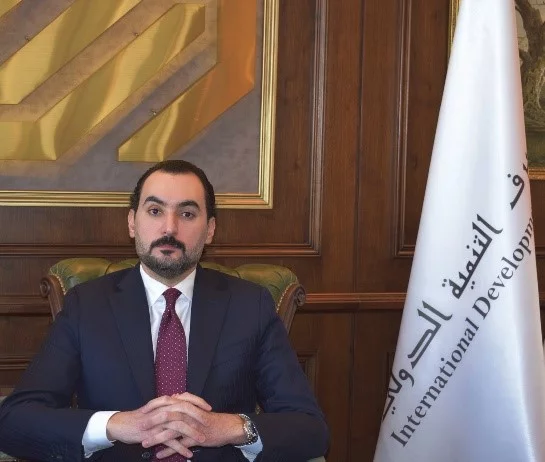
Dr. Ziad Khalaf Abd Karim, Presented Initiatives in Collaboration with the Central Bank of Iraq
Talking to Engineer Ziad Khalaf Abdul Karim, Chairman of the Board of Directors of the International Development Bank for Investment and Finance, adds significant value, as he has positioned the bank at the forefront of both public and private banks in Iraq. This is due to the services provided and the trust earned from major banking clients in Iraq, the Arab region, and the world. Additionally, the bank has built an excellent international reputation by adhering to global standards, succeeding in providing electronic services, ensuring liquidity, and establishing a solid financial center.
It is worth noting that Engineer Ziad Khalaf Abdul Karim has been awarded the International Prize for Economics and Banking Management by the Arab-European Center for Human Rights, in recognition of his institutional achievements in the commercial, banking, and financial sectors, as well as his expansion plan both inside and outside Iraq and the banking services he has provided.
Engineer Ziad Khalaf, Chairman of the International Development Bank, is one of the bank's major founders. In less than ten years, he managed to transform the emerging bank into one of the most trusted banks in Iraq and the region. The International Development Bank is considered a pioneer in Iraqi banking and has expanded regionally and internationally with remarkable efficiency.
Since Engineer Ziad Khalaf took over as chairman in 2015, he has charted the bank's future by focusing on the digital transformation of banking services to meet the aspirations and needs of depositors in Iraq. He established long-term strategic partnerships with international institutions in the field of electronic payments, such as Visa and Mastercard. Under his leadership, the International Development Bank became the first bank in Iraq to open representative offices in the United Arab Emirates and Lebanon.
Engineer Ziad Khalaf has also received several awards, including the Excellence in Wise Management Award in 2017, the Most Innovative and Evolving Bank Award from the Union of Arab Banks in 2016, the Best Bank for Business Performance from MasterCard in 2017, the Arab Investor Award for Implementing Corporate Governance Standards in 2019, and the Fastest Growing Bank in Iraq Award from the Global Finance Awards in 2019 in Dubai.
Engineer Ziad Khalaf's achievements in banking and financial management led to his appointment as a member of the Board of the Union of Arab Banks in 2019, becoming the first representative of both the public and private banking sectors in Iraq.
In an interview with the "Union of Arab Banks" magazine, Engineer Ziad Khalaf Abdul Karim, Chairman of the International Development Bank for Investment and Finance, stated: "The Iraqi citizen needs to rebuild trust in the Iraqi banking sector."
This trust is generated through the services provided by the sector to meet citizens' needs. At the International Development Bank, we have launched initiatives in cooperation with the Central Bank of Iraq, the latest of which is the initiative of one trillion Iraqi dinars, to support various sectors, including industry, agriculture, and housing, through loans supported by the Central Bank and Iraqi private banks. This initiative aims to support industrial and agricultural projects, as well as small and medium-sized enterprises inside Iraq, in addition to offering loans and various banking products to public sector employees and others.
Engineer Ziad Khalaf Abdul Karim confirmed that the Central Bank of Iraq and private and public Iraqi banks have financed approximately 8,700 projects in Iraq, totaling around 750 billion Iraqi dinars, equivalent to 600 million dollars. He believes that Iraqi traders and industrialists have inherited expertise and potential in a country rich with resources and wealth. However, he stresses the need for a roadmap and concerted efforts moving forward, as Iraq's economy is poised for a significant resurgence.
Engineer Ziad Khalaf Abdul Karim concluded by saying: We need to create a new environment in Iraq that is attractive to investment, rather than one that deters investors. If you look at the White Paper approved by the Iraqi government and presented by the Ministry of Finance, it includes all the solutions outlined by the G7 countries, along with modern legislation, to support investments and protect investors. The difficult economic phase in Iraq has been overcome, and the coming phase will be much better."
Below is the interview with Engineer Dr. Ziad Khalaf Abdul Karim, Chairman of the Board of Directors of the International Development Bank for Investment and Finance and Member of the Board of the Union of Arab Banks:
What is the strategy that the International Development Bank is working on in the upcoming phase? It is clear that social entitlement is receiving a great deal of attention, as we engage more deeply with society, achieving a distinguished banking role. What are the key features of this role?
There is no doubt that the Union of Arab Banks has been proactive in cooperating with the Arab banking sector, especially the Iraqi banking sector, and supporting it. We have seen this interest and support, highlighting the major challenges and successes achieved by Iraqi financial and banking institutions.
As for the International Development Bank, it is a private bank that is less than 10 years old, but it has worked with a clear and explicit strategy. The core of this strategy is that the bank is a real profitable financial institution. However, our focus is not just on profit, but also on the bank's real social and ethical responsibility towards the Iraqi society. Based on this, strategies were developed for the bank on how to achieve the most prominent position in the Iraqi banking sector by offering support and services to the people of Iraq.
The International Development Bank has adhered to international standards since its establishment, and over the course of its development, it has expanded across Iraq, with approximately 22 branches from the north to the south, as well as having a presence outside Iraq through representative offices in Beirut, Lebanon, and the UAE. The bank may open more branches in the future, serving both our customers inside and outside Iraq.
The International Development Bank has played a crucial role in Iraq's economic development, especially through initiatives launched by the Central Bank of Iraq. We faced two major challenges: firstly, the Iraqi banking sector was not a private sector, and our bank worked hard to overcome many challenges, the most significant of which was financial inclusion. The International Development Bank has played a key role in supporting financial inclusion and introducing banking culture into Iraqi society. We have made a significant contribution to this, in addition to participating in the most important initiatives launched by the Central Bank of Iraq and the Iraqi government, such as the nationalization of salaries and pensions for public sector employees in Iraq. Among Iraqi banks, our bank ranks first in this regard, gaining the trust of Iraqi society and making significant strides in financial inclusion, which had previously been limited to only 15% of the population, compared to 45% in the Arab world, 60% in Saudi Arabia, and 75% in the UAE.
The other challenge is how to provide services to the Iraqi people and society.
What does the Iraqi people need from the banking sector?
The Iraqi citizen needs to trust the Iraqi banking sector. This trust is built through the services this sector provides to meet their needs. We have started addressing this issue and have launched initiatives with the Central Bank of Iraq, the latest of which is the one trillion Iraqi dinar initiative to support various sectors, including industry, agriculture, and housing, through loans backed by the Central Bank and Iraqi private banks. Our role has been significant in supporting industrial, agricultural, and small and medium-sized projects inside Iraq, in addition to providing loans and various products to public sector employees and others.
How does the Iraqi citizen perceive the trust that has been built between the private banking sector and the citizens, especially considering past negative experiences?
Recently, Iraq has experienced major political fluctuations, which have, unfortunately, significantly impacted the economic front, especially the banking sector. This posed a huge challenge for the sector. However, today, I believe that the Iraqi banking sector is starting to stabilize significantly, taking positive steps and achieving tangible successes. It has regained the trust of Iraqi society by offering valuable services. The International Development Bank provides a wide range of services to both individuals and businesses. A significant portion of trade in the Iraqi market is currently conducted through our bank, particularly in opening letters of credit.
Does this mean that you have moved away from relying on the role of the Iraqi Trade Bank, which used to handle matters like opening documents, credits, and foreign cooperation?
The world is changing every day, especially after the COVID-19 pandemic. The issue of relying on the role of the Iraqi Trade Bank belongs to traditional business practices, while the global banking sector has adopted a new culture related to modern technology, especially Fintech (financial technology). Many people from our community and other communities are joining electronic banking services.
The bank that is most present and strong within its community is the one that offers electronic services to the largest segment of citizens, whether in the public or private sector.
So, is the competition now about providing digital services, which the International Development Bank offers comprehensively to the Iraqi community?
Five years ago, as part of the strategic vision of our Board of Directors, we made a decision to invest heavily in infrastructure, which would push forward and develop banking technology, placing it at the forefront of banking operations. Today, the International Development Bank provides banking services based on modern technology, especially Fintech, according to the highest international standards followed by global banks in developed countries. We have also started implementing the Digital Transformation process, and the International Development Bank will be at the forefront of adopting digital transformation technology and offering electronic services.
Iraqi banking transformation is progressing alongside global development, and in fact, keeping up with it significantly. However, Iraqi Finance Minister Ali Allawi recently stated that Iraq needs to transition from an over-reliance on oil (an oil-based economy) to industrial and agricultural production. To what extent are you involved in this new transformation?
It is no secret that Iraq’s economy is promising and rich, ranking third in the Arab world and fifth globally in terms of oil reserves. The Iraqi people have great opportunities through their human resources and talents, especially the youth, who are both a revolution and a resource. They represent a significant portion of the Iraqi population, which is about 42 million people.
The Iraqi population is considered young, with about 70% of the population being young adults. This means we have a huge opportunity to invest in the Iraqi market in various fields. The previous periods in Iraq were based on a rentier economy, with the national income relying heavily on oil production.
I believe that the coming phase (as recently mentioned by the Finance Minister) will be based on efforts to create a productive economy, primarily relying on industrial and agricultural products, not just oil. The Iraqi banking sector is the gateway and the main channel to activate other economic sectors, and this is what we have been working on and will continue to do. Iraq has received funding from the Central Bank of Iraq, as well as private and government banks, for about 8,700 projects, totaling around 750 billion Iraqi dinars, equivalent to approximately 600 million dollars. I believe that Iraqi traders and industrialists have inherited expertise and the potential in a country with abundant resources, but we now need a roadmap and concerted efforts in the coming phase, as Iraq’s economy is promised a great revival.
Despite the progress Iraq has made in banking and technology, there is still concern about investing in Iraq due to current legal issues and regulations that do not protect investors. Is Iraq on the path to providing a secure environment for investors?
In Iraq, we need to create a new environment that attracts investment, rather than one that deters investors. If you look at the white paper approved by the Iraqi government and presented by the Ministry of Finance, it includes all the solutions endorsed by the Group of Seven countries. It also includes modern legislation aimed at supporting investments and protecting investors, with a roadmap to follow. The difficult economic phase in Iraq has been overcome, and the coming phase will be much better.